

The 2027 Grammy Awards, set for February 7, 2027, feature a strong lineup of jazz nominees across six dedicated categories. From jazz vocal albums to alternative jazz, this year's nominations reflect the genre's exciting range — spanning soul-influenced vocalists, instrumental innovators, and boundary-pushing ensembles.
Jazz Performance and Vocal Album Nominees
In the Best Jazz Performance category, you'll find Jon Batiste, Cécile McLorin Salvant with the Metropole Orkest, and Nicole Zuraitis among the contenders. The Best Jazz Vocal Album race is equally compelling, with Ledisi, Gretchen Parlato, Catherine Russell, and Cécile McLorin Salvant all vying for the award. These nominations highlight the soul and depth that continues to define modern jazz vocals.
Instrumental, Ensemble, and Alternative Jazz Categories
On the instrumental side, Jon Batiste's Monk Movements, Pat Metheny's Side-Eye III+, and Lakecia Benjamin's We Dream lead the Best Jazz Instrumental Album field. The Best Large Jazz Ensemble Album category features international jazz talent, including the WDR Big Band with Kurt Elling and the Frankfurt Radio Big Band. The newly relevant Best Alternative Jazz Album category spotlights artists like Terri Lyne Carrington and Cécile McLorin Salvant pushing jazz into fresh sonic territory.
Latin Jazz and Jazz-Adjacent Nominations
Latin jazz gets strong representation with nominees including Melissa Aldana, Eliane Elias, and Miguel Zenón. Beyond the dedicated jazz categories, jazz news fans will note that RAYE earned a remarkable sweep of major general categories, while Cécile McLorin Salvant also picked up a Best Arrangement nod. Chick Corea and Ben Wendel round out the arrangement categories, underscoring jazz's continued presence across the full Grammy spectrum.
Key Takeaways
The 2027 Grammy jazz nominations showcase the genre's remarkable diversity — from soul-drenched vocals to adventurous alternative jazz. Mark February 7, 2027 on your calendar and keep an eye on standout contenders like Cécile McLorin Salvant, Jon Batiste, and Lakecia Benjamin, who each earned multiple nods this cycle.
Author: Sebastian Scotney
Source: UK Jazz News
Published: November 16, 2026
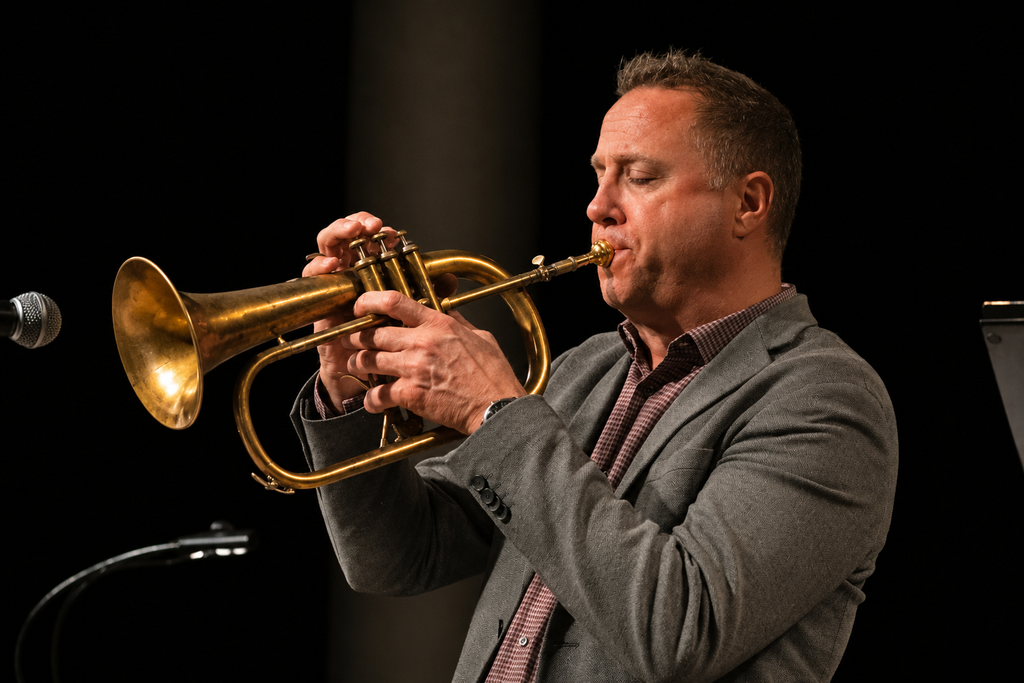
The Peter Protschka Quintet featuring Rick Margitza delivered a commanding post-bop jazz performance in Bad Goisern, Austria. Rooted in the American jazz tradition of the 1960s, this European-touring ensemble proved that classic influences can still hit with real edge and energy.
Post-Bop Jazz With a Sharp European Edge
Touring together since 2013, German trumpeter Peter Protschka and former Miles Davis saxophonist Rick Margitza have built a deep musical trust that shows on stage. Their interplay — Protschka's bright, cutting trumpet tone against Margitza's rich tenor saxophone — gave the concert its defining character. Original compositions from both leaders anchored the set, alongside well-chosen standards like 'You're My Everything,' which drew one of the night's standout solos.
A Rhythm Section That Stole the Show
The second half of the concert shifted the spotlight toward the full ensemble. A tribute piece dedicated to Sonny Rollins opened the door for extended solos across the band, with drummer Tobias Backhaus delivering clockwork precision throughout. Pianist Andreas Feith and bassist Martin Gjakonovski rounded out a rhythm section so strong that, by the final number, the trio alone held the audience completely. Their closing performance as a unit was, by any measure, sensational.
From Miles Davis to the European Jazz Scene
Rick Margitza's path into Miles Davis's band — sparked by a demo tape heard over the phone — is the kind of jazz news story that reminds you how talent finds its moment. Now a fixture on the European jazz circuit, Margitza continues to bring that pedigree to intimate venues across the continent. This Bad Goisern concert was a reminder that the soul of American post-bop is very much alive in European jazz today.
Key Takeaways
The Peter Protschka Quintet featuring Rick Margitza delivered a post-bop jazz concert that balanced tradition with genuine spontaneity. Every member of the quintet earned their moment, with the rhythm section emerging as an unexpected highlight. For fans of jazz with real depth and character, this is a live act worth following.
Author: herbert
Source: Concerto
Published: November 25, 2026

European jazz has no shortage of talent — but it's running out of stages. Saxophonist Rick Margitza and trumpeter Peter Protschka sat down after their Bad Goisern concert to discuss Miles Davis, the blurring of American and European jazz traditions, and the growing challenge of finding meaningful performance spaces for today's jazz musicians.
How a Demo Tape Led to a Miles Davis Phone Call
Rick Margitza's path into Miles Davis's band started with a demo recorded in New Orleans. A friend working at Blue Note in New York passed the tape to producer Tommy LiPuma, who played it to Davis over the phone. Shortly after, Margitza received a call from Davis himself — no email, no MP3, just a phone and the right ears at the right time. Beyond the story itself, what Margitza took from working with Davis was a deeper understanding of space in music. The power of silence, the tension built by not playing — these became central to his artistic voice.
Where American Jazz Ends and European Jazz Begins
Peter Protschka describes his music as contemporary post-bop with a distinctly European, poetic sensibility — built on unusual harmonic turns, odd meters, and unconventional forms. Margitza pushes back on the idea of a clean divide between American and European jazz, pointing out that jazz itself was shaped by European composers like Béla Bartók, Stravinsky, and Mahler. The two traditions have always been in conversation. Margitza also collaborated with Danish guitarist Søren Lee on the 2020 album Grace, a project that grew from connections within the Scandinavian jazz scene. He's now exploring a piano-less trio format — saxophone, bass, and drums — inspired by Sonny Rollins.
Jazz Has the Talent — But Where Are the Stages?
Margitza is candid about the state of international jazz: young musicians are exceptional, but performance opportunities are shrinking. Major European festivals like Nice and Montreux have drifted toward pop, leaving fewer platforms for serious jazz. Both Margitza and Protschka agree that the European jazz scene holds its own against American jazz artistically — the problem is infrastructure, not quality. Small clubs offer intimacy and direct audience connection, while large festivals can introduce jazz to new listeners. Grassroots initiatives like the Jazzfreunde in Bad Goisern, bringing international jazz to smaller communities, represent exactly the kind of solution the scene needs.
Key Takeaways
Rick Margitza and Peter Protschka represent a generation of jazz musicians bridging American tradition and European innovation. Their conversation is a reminder that the future of jazz depends not just on artistic talent, but on preserving the spaces where that talent can be heard.
Author: herbert
Source: Concerto
Published: November 25, 2026
Makam Salam is a London-based collective using jazz and soul to bridge cultures across the SWANA region. At the EFG London Jazz Festival, this ensemble of Israeli, Palestinian, Kurdish, Lebanese, Tunisian and Iranian musicians delivered a powerful in-the-round performance at The Cockpit in Marylebone, proving that music can open doors that politics keeps firmly shut.
An Intimate Jazz Concert Built for Connection
The Cockpit's concrete-domed, brutalist interior proved the perfect setting for Makam Salam's immersive set. Unlike the festival's larger headline stages, this in-the-round format placed the audience directly inside the music, making every note and lyric feel personal. It's the kind of jazz experience that stays with you long after the final chord fades.
Mira Awad and the Power of Shared Stories
Palestinian-Israeli artist and activist Mira Awad stood at the heart of the ensemble, weaving together Klezmer, 1970s Lebanese songs and original poetry. Her piece 'Can You Love Me/Hope' featured recorded testimonies from the Jerusalem Youth Chorus, a project uniting Israeli and Palestinian youth through song and dialogue. Her message was clear: shared understanding over polarisation, always.
Jazz, Oud and Kurdish Tradition Collide
Bandleader Tomer Eldor blended fast jazz solos with Middle Eastern flavours on the keys, while Turkish oud player Baha Yetkin and Daniel Gouly's clarinet added rich international jazz textures. Olcay Bahir performed Kurdish traditional pieces, and Lebanese violinist Rita Issa delivered a Fairuz classic, 'Bint el Shalabiya'. The result was a fluid, genre-defying sound rooted in soul and cultural exchange.
Key Takeaways
Makam Salam's London Jazz Festival showcase confirmed this collective as one of the most vital and humane voices in contemporary jazz. With recent performances building momentum and an album debut anticipated, their music offers something rare: genuine dialogue across one of the world's most conflicted regions.
Author: Sebastian Scotney
Source: UK Jazz News
Published: November 25, 2026
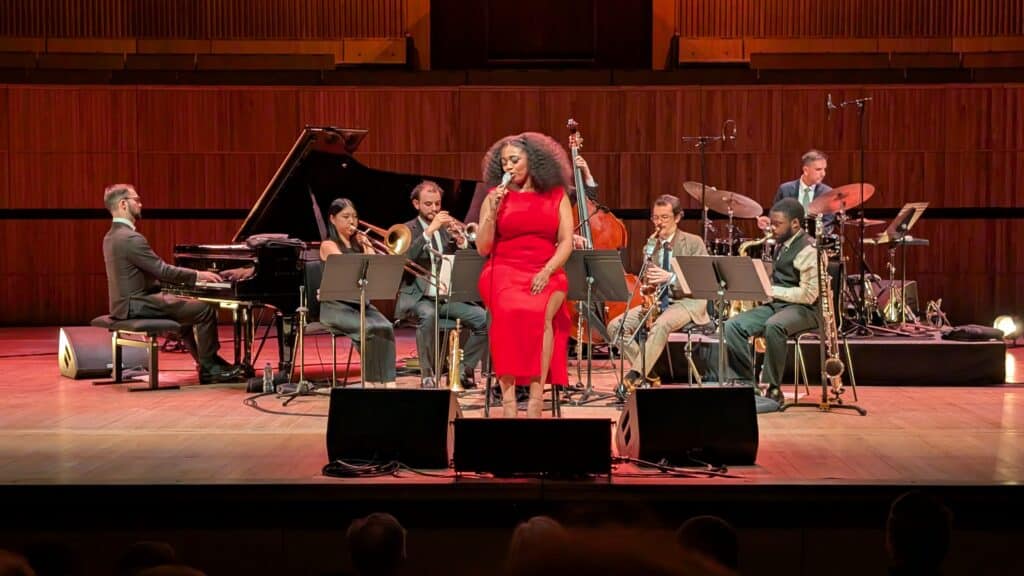
Samara Joy closed the EFG London Jazz Festival with one of the most electrifying jazz vocal performances London has seen in years. The six-time Grammy winner made her Royal Festival Hall debut on the final night of her European tour, delivering a set that moved effortlessly from bebop fire to tender ballads.
A Jazz Vocal Masterclass From Start to Finish
You would have been hard-pressed to find a better way to end ten days of jazz news and live music than this. Samara Joy opened with Billy Strayhorn's UMMG, for which she had written her own lyrics, launching into high-energy scatting over a hard-swinging septet. The band's tight interplay and a thunderous drum solo from Evan Sherman set the tone for the entire evening. Three Little Words followed, pushing the energy even higher with a frantic ride cymbal and a fiery tenor sax solo.
Ballads, Monk, and the Soul of the Set
The concert's emotional depth came through on Strayhorn's Lush Life, where you could hear the full softness and delicacy of Joy's voice in an almost effortless rendition. A medley of Thelonious Monk's Ruby My Dear and Monk's Mood showcased her extraordinary range, moving from warm, low velvet tones to a stunning upper register. Jerome Kern's Yesterdays featured flute and trombone solos before Samara's wordless vocals drew cheers from the crowd. These moments captured the very soul of classic jazz tradition.
Ellington, Elbow Room, and a Band Built to Last
The highlight of the evening was a gorgeous arrangement of Duke Ellington's Sunset and the Mockingbird, which began as a quiet, contemplative piano-and-voice duet before building into something that sounded more like a full big band. Samara revealed the septet had been together nearly four years, and their unified sound proved it. The concert closed with a bluesy, majestic encore of Louis Jordan's Buzz Me, leaving the audience with a performance that felt both timeless and alive with funk and swing.
Key Takeaways
Samara Joy's Royal Festival Hall debut was a landmark moment in jazz, blending technical brilliance with genuine emotional warmth. Her septet proved that great jazz is built on years of shared musical trust. If you missed it, make sure she's the first name on your list next time she tours Europe.
Author: Sebastian Scotney
Source: UK Jazz News
Published: November 25, 2026
The Malaysian Jazz Real Book is a bold national initiative to document and share Malaysian jazz heritage with the world. Global TV platform Oh! Jazz has named BoboKL in Kuala Lumpur as its first metropolitan recording hub, with Co-Artistic Directors Tay Cher Siang and Michael Veerapen leading the charge to bring this rich jazz tradition to international audiences.
What Is the Malaysian Jazz Real Book Project
The Malaysian Jazz Real Book is an ambitious archiving and broadcasting initiative spearheaded by Oh! Jazz. Its mission is to document Malaysia's vibrant jazz scene and export it to global audiences through a dedicated TV platform. The project positions Malaysian jazz alongside other celebrated international jazz traditions, giving it the visibility it deserves on the world stage.
Why BoboKL Is the Heart of This Jazz Movement
BoboKL, Kuala Lumpur's premier intimate music lounge, has been selected as the first recording hub for the project. Its reputation as a cultural gathering space makes it an ideal setting to capture the soul and authenticity of Malaysian jazz. The Kuala Lumpur sessions are just the beginning, with heritage locations in Penang and Malacca set to follow in 2027.
A Vision for Malaysian Jazz on the Global Stage
Co-Artistic Directors Tay Cher Siang and Michael Veerapen are driving a national movement that blends jazz news with cultural preservation. By recording and broadcasting these sessions, Oh! Jazz aims to place Malaysian jazz in conversation with european jazz, japanese jazz, and other global traditions. This initiative ensures that Malaysia's unique musical identity reaches younger, globally connected audiences.
Key Takeaways
The Malaysian Jazz Real Book is a landmark project that puts Malaysian jazz heritage on the global map. With BoboKL as the launchpad and sessions planned for Penang and Malacca in 2027, this initiative is a powerful step toward preserving and sharing Malaysia's soul-rich jazz culture with the world.
Author: AllAboutJazz.com
Source: All About Jazz
Published: November 25, 2026
Kiefer, the California-based artist blending jazz and hip-hop, believes many jazz musicians fail to take beatmaking seriously. Newly signed to the legendary Blue Note label, Kiefer is pushing boundaries at the intersection of two genres, bringing a fresh perspective to modern jazz news and culture.
Where Jazz Tradition Meets Hip-Hop Innovation
Kiefer occupies a unique space in contemporary music, fusing jazz harmony and improvisation with the rhythmic sensibility of hip-hop beatmaking. His approach challenges the traditional boundaries that have long separated these two worlds. For a younger generation raised on both soul-driven jazz and beat-heavy production, his sound feels both familiar and forward-thinking.
Why Jazz Musicians Underestimate Beatmaking
According to Kiefer, a significant gap in understanding exists between classically trained jazz musicians and the world of beat production. He argues that beatmaking demands its own form of musicality, creativity, and discipline — qualities that deserve equal respect. This tension between old-school jazz values and modern production culture is something Kiefer navigates daily in his work.
A New Chapter at Blue Note Records
Signing with Blue Note Records marks a major milestone for Kiefer, placing him alongside some of the most celebrated names in jazz history. The label's legacy of championing innovative artists makes it a natural home for his genre-blending vision. His arrival signals that jazz continues to evolve, embracing funk, soul, and hip-hop influences without losing its identity.
Key Takeaways
Kiefer's move to Blue Note Records highlights a growing shift in jazz toward embracing beatmaking and hip-hop culture. His work challenges outdated perceptions and invites a new generation into the conversation. For fans of jazz, soul, and funk, he represents exactly the kind of boundary-pushing artistry the genre needs right now.
Author: Yazid Kouloughli
Source: Jazz Magazine
Published: November 25, 2026

Les Boréales festival delivered two standout Scandinavian jazz performances in Caen, France, showcasing the depth and range of nordic jazz. From a boundary-pushing trio at the Théâtre de Caen to an intimate Swedish vocalist set at Camion Jazz, the festival proved that European jazz continues to push creative frontiers.
Bugge Wesseltoft and Arild Andersen Redefine Nordic Jazz
On November 13, the Théâtre de Caen hosted a remarkable trio featuring Norwegian pianist Bugge Wesseltoft, veteran double bassist Arild Andersen, and tabla player Sanskriti Shrestha. The performance blurred the boundaries of jazz, weaving together improvisation, minimalism, and subtle electronic textures into something genuinely singular. Andersen, a collaborator of legends like Sonny Rollins and Kenny Wheeler, anchored the set with commanding authority. The trio's chemistry was immediate, creating a spellbinding atmosphere that held the audience in near-silence between each piece.
Sofie Sörman Quartet Brings Swedish Soul to Camion Jazz
A week later, Swedish vocalist Sofie Sörman brought her quartet to the intimate Camion Jazz venue in Louvigny. Born in Stockholm and now based in Paris, Sörman has been recording jazz since 2014, and her live performance reflected years of artistic refinement. Her set blended jazz and chanson, drawing on Nordic landscapes, nature, and silence as lyrical themes. American pianist Rob Clearfield, now based in Marseille, delivered an expressive and lyrical performance that perfectly complemented Sörman's distinctive Swedish-accented voice.
Why Les Boréales Matters for International Jazz
Les Boréales is one of France's most consistent platforms for international jazz, specifically championing Scandinavian and Nordic artists across multiple disciplines. Both concerts demonstrated how european jazz continues to evolve — absorbing world music influences, crossing genre lines, and finding new emotional registers. For fans of jazz news and live performance, this festival remains essential viewing each November in Normandy.
Key Takeaways
Les Boréales 2026 confirmed its reputation as a vital showcase for nordic jazz talent, delivering two memorable concerts that challenged and delighted audiences in equal measure. Whether through Wesseltoft's genre-defying trio or Sörman's lyrical blend of jazz and Swedish chanson, the festival proved that Scandinavian jazz is thriving and evolving. Mark your calendar for next year's edition.
Author: Jean-Louis Libois
Source: Culture Jazz
Published: November 26, 2026
A landmark jazz concert at Union Chapel on 6 December honours the life and legacy of Bill Ashton OBE, founder of the National Youth Jazz Orchestra. Three world-class big bands will perform in tribute to one of the most influential figures in UK jazz education history.
Why Bill Ashton Matters to UK Jazz
Bill Ashton founded NYJO at the height of Beatlemania, at a time when horn players were being booed off stage. His determination to champion big band jazz helped shape an entire generation of musicians. His son Miles credits him as the driving force behind jazz education in the UK, noting that no music college offered a jazz course before Ashton began his work.
Three Big Bands, One Night of Jazz
The concert features NYJO, the BBC Big Band directed by Paul Eshelby, and the Ronnie Scott's Jazz Orchestra directed by Pete Long. All three bands are packed with NYJO alumni, making this a true reunion of the UK jazz scene. The evening closes with flautist Gareth Lockrane performing Paul Hart's moving composition Remembrance.
Four Charities Benefit from the Show
All proceeds from the evening are split between Help Musicians, the Ronnie Scott's Charitable Foundation, Union Chapel, and NYJO itself. You can also take home one of over 100 of Bill's signature colourful hats as a souvenir. It is a rare chance to support jazz news and culture while experiencing a truly historic night of live music.
Key Takeaways
The Bill Ashton tribute concert is a once-in-a-generation celebration of a man who kept big band jazz alive in the UK. Whether you are a lifelong jazz fan or new to the scene, this is an unmissable evening of soul, music, and community at Union Chapel on 6 December.
Author: Sebastian Scotney
Source: UK Jazz News
Published: November 24, 2026

The Mark Priore Trio delivered a breathtaking jazz performance at Paris's Bal Blomet, presenting Lux Divina, an ambitious 11-chapter suite that blends jazz, baroque, and late Romantic influences into a single cohesive vision. If you follow jazz news closely, this trio is one to watch right now.
A Jazz Suite Built on Depth and Vision
Lux Divina is no casual set list. Mark Priore has crafted a narrative arc that moves through light and shadow, drawing comparisons to Ahmad Jamal and Keith Jarrett while reaching further back into baroque and 19th-century Romanticism. The result is a jazz experience that feels both historically rooted and urgently modern. You can hear a composer actively finding his own voice, and that search is compelling in itself.
Three Musicians, One Shared Identity
Priore is joined by Juan Villaroel on double bass and Élie Martin-Charrière on drums, all three alumni of the CNSDP in Paris. Their shared training shows in the intuitive interplay between them. Priore's left hand mirrors Villaroel's bass lines while his right hand sings independently, and Martin-Charrière holds the entire architecture together with precision and sensitivity. This is the kind of trio chemistry that defines european jazz at its best.
A Standing Ovation and a Promising Future
The Bal Blomet crowd responded with a full standing ovation, calling for more at the end of the night. What makes this trio so exciting is that they are still evolving. Their technical fluency is already evident, but their collective identity is still crystallizing. That process of becoming is exactly what makes their soul-driven, poetic jazz worth following closely.
Key Takeaways
The Mark Priore Trio's Lux Divina is a bold, beautifully constructed jazz suite that signals the arrival of a genuinely distinctive voice in contemporary jazz. With strong ensemble chemistry and a rich musical vocabulary, this trio is building something worth paying attention to. Keep them on your radar.
Author: Pierre Gros
Source: Culture Jazz
Published: November 24, 2026
All About Jazz has launched Article Series, a new editorial feature that groups related jazz articles into curated collections. This addition gives you a smarter way to dive deep into jazz history, culture, and the people who shaped the music.
What the Article Series Feature Means for Jazz Discovery
All About Jazz is already one of the world's most comprehensive jazz platforms, and Article Series takes that depth further. By organizing related content into dedicated collections, the feature makes it easier for you to follow a topic from multiple angles. Whether you're exploring jazz news, a specific artist, or a broader cultural movement, the series format keeps you connected to the full story.
How Jazz Fans and Soul Music Lovers Can Benefit
If you're passionate about jazz, soul, or funk, this feature is built for you. Instead of stumbling across isolated articles, you can now follow structured editorial threads that build context over time. It's a more immersive way to engage with the music and the culture surrounding it, from international jazz scenes to niche subgenres.
Key Takeaways
All About Jazz's Article Series feature transforms how you explore jazz journalism by connecting related content into meaningful collections. It's a valuable tool for anyone looking to go beyond surface-level discovery and engage more deeply with the world of jazz.
Author: AllAboutJazz.com
Source: All About Jazz
Published: November 24, 2026
